
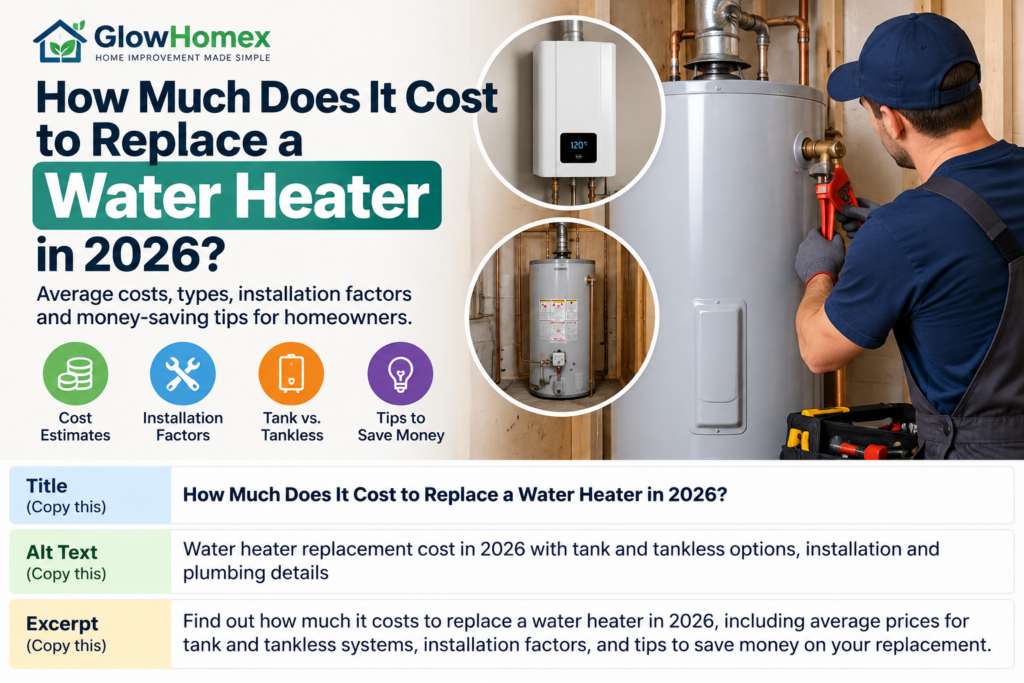
The water heater replacement cost depends on the type of system you choose, its capacity, installation labor, and whether plumbing, electrical, gas-line, or venting changes are required. Replacing an existing unit in the same location may be simpler than installing a different type of water heater.
This guide explains the main costs, differences between common water heater types, and questions to ask before hiring a contractor. The prices below are illustrative budgeting estimates for homeowners in the United States, not independently verified national averages or guaranteed 2026 quotes.
Quick Answer: Water Heater Replacement Cost
The total water heater replacement cost can include the new unit, installation labor, required materials, permits where applicable, and removal of the old heater. The final price depends on the equipment, the condition of existing connections, and local installation requirements.
| Replacement type | Planning estimate (USD) | Potential cost factors |
|---|---|---|
| Basic storage-tank replacement | $800–$2,000 | Tank capacity, fuel type, and labor |
| High-efficiency tank replacement | $1,200–$2,500 | Equipment price and installation needs |
| Tankless water heater installation | $1,500–$4,500+ | Gas, electrical, and venting requirements |
| Heat pump water heater installation | $2,000–$5,000+ | Equipment, space, and electrical work |
| Installation with major modifications | May cost more | New connections, venting, or structural work |
Important: These figures are broad planning examples, not verified current market averages. Actual water heater replacement cost varies by region, contractor, model, installation complexity, taxes, and local requirements. Obtain itemized quotes before making a purchase.
What Is Included in Water Heater Replacement Cost?
Comparing individual cost components can help you understand what a contractor’s quote includes and why two estimates may differ.
1. The Water Heater Unit
The purchase price depends on the system type, capacity, fuel source, efficiency rating, and manufacturer. A basic storage tank may have a lower initial price than a tankless or heat pump model. Choose a system that suits your household’s hot-water needs rather than selecting equipment by price alone.
2. Installation Labor
Labor depends on local contractor rates, access to the existing unit, and the complexity of connecting the replacement. A like-for-like installation may require less work than a project involving a new location or a different fuel source.
3. Plumbing and Installation Materials
Some projects require new valves, pipes, fittings, a drain pan, an expansion tank, or other components. Whether these items are necessary depends on the existing installation, the selected unit, and applicable requirements. Ask the contractor to itemize them.
4. Gas, Electrical, and Venting Work
Changing from one system type to another can require additional work. A tankless model may need different gas capacity or venting, while an electric or heat pump unit may have specific electrical requirements. Confirm these needs before purchasing equipment.
5. Permits and Inspections
Some installations require permits or inspections. Requirements vary by jurisdiction and by the work involved. Ask the contractor which permits apply and whether permit fees are included in the quote.
6. Removal and Disposal
Ask whether the price includes disconnecting, draining, removing, and disposing of the old unit. Confirm any additional charges before approving the work.
Tank vs. Tankless vs. Heat Pump Water Heaters
The right system depends on household demand, available space, energy source, installation conditions, and your budget. The lowest purchase price does not always mean the lowest long-term cost.
Traditional Storage-Tank Water Heaters
A storage-tank system keeps a supply of hot water ready for use. It may be a practical option when replacing an existing unit with a similar model. Compare tank capacity, energy source, efficiency, warranty, and available installation space.
Tankless Water Heaters
A tankless system heats water as it is needed rather than storing a large tank of hot water. It can save space, but the initial water heater replacement cost may be higher if gas lines, electrical capacity, or venting need upgrades. Check whether the system can meet your household’s simultaneous hot-water demand.
Heat Pump Water Heaters
A heat pump water heater moves heat from the surrounding air to warm water. It can use less electricity than conventional electric resistance water heating in suitable conditions, but equipment and installation may cost more initially.
Before choosing a heat pump model, check the available space, surrounding-air requirements, condensate drainage, noise, electrical needs, and local climate suitability. Also investigate any current utility incentives or rebates that may apply.
Factors That Affect the Final Replacement Price
Household Size and Hot-Water Demand
Household size, shower schedules, appliances, and simultaneous hot-water use affect the capacity or output required. Ask a qualified installer to assess demand instead of automatically choosing the largest model.
Location and Contractor Rates
Labor, travel, disposal, and permit costs vary by area. A written quote from a local contractor is more useful for budgeting than a general online estimate.
Existing Connections and Equipment Location
Damaged connections, limited access, an unsuitable drain arrangement, or relocating the unit can increase labor and material costs. Ask whether the contractor has included these possibilities in the estimate.
Efficiency and Warranty
A higher-efficiency unit may cost more initially but could reduce energy use under suitable conditions. Compare the manufacturer’s efficiency information, warranty coverage, maintenance requirements, and expected operating costs before deciding.
Example Water Heater Replacement Budget
The following example demonstrates how separate charges can add up for a hypothetical storage-tank replacement. It is an illustrative calculation, not a verified average or a quote for your location.
| Item | Example amount |
|---|---|
| New water heater | $900 |
| Installation labor | $500 |
| Additional materials | $150 |
| Permit and disposal allowance | $100 |
| Illustrative total | $1,650 |
To estimate your own water heater replacement cost, add the equipment price, labor, materials, applicable taxes, permit fees, and disposal charges. Ask the contractor to explain which costs are fixed and which could change if additional work is discovered.
How to Compare Water Heater Replacement Quotes
Request itemized estimates from qualified local contractors. Give each contractor the same basic information about your current unit, fuel source, location, and household needs so the quotes are easier to compare.
- Does the quote include the unit, labor, materials, and removal of the old heater?
- Are permit and inspection fees included?
- Will existing plumbing, electrical connections, gas lines, and venting be reused?
- Are any upgrades or repairs likely to be required?
- What warranty applies to the equipment and the installation work?
- Will the contractor get approval before performing extra work?
Do not choose a contractor based on the lowest price alone. Check licensing where required, insurance, the written scope of work, warranty terms, and the contractor’s relevant experience.
How to Plan for a Water Heater Replacement
- Identify your current unit. Record the model, fuel type, capacity, and any visible signs of trouble.
- Assess your household’s needs. Consider how much hot water your household uses and when demand is highest.
- Compare suitable systems. Evaluate storage-tank, tankless, and heat pump options where appropriate.
- Request itemized quotes. Compare equipment, labor, materials, permits, disposal, and possible upgrades.
- Check local requirements. Confirm installation, permit, and inspection requirements with the relevant local authority or installer.
- Review warranty and maintenance. Understand the manufacturer’s instructions and recommended maintenance before buying.
Should You Repair or Replace Your Water Heater?
A repairable component problem does not always require replacing the entire system. However, a leaking storage tank, significant corrosion, repeated failures, or a unit nearing the end of its expected service life may justify considering a replacement.
Ask a qualified professional to inspect the unit and compare the repair estimate with the total replacement quote. Consider the unit’s condition, warranty, reliability, and expected future maintenance rather than relying on age alone.
If water is leaking near electrical equipment, keep clear of the hazard and seek professional help. Do not touch wet electrical equipment or attempt repairs that could expose you to electrical or scalding hazards.
Energy Efficiency and Water Heating
Water heating energy use depends on the system, fuel, household demand, temperature settings, and maintenance. When comparing replacement options, review official efficiency information and calculate potential savings using your actual energy rates and expected usage.
The U.S. Department of Energy provides guidance on water-heating systems, efficiency, and operating considerations.
Read the U.S. Department of Energy’s Water Heating guide.
Available incentives and eligibility rules can change. Confirm current program details with the relevant government agency or utility before including a rebate in your budget.
Frequently Asked Questions
How much does it cost to replace a water heater in 2026?
The water heater replacement cost depends on the system, location, labor, and installation requirements. The figures in this guide are illustrative planning examples, not verified current market averages. Request current local quotes for a more accurate estimate.
Is a tankless water heater more expensive to install?
It can be. Equipment costs and any required gas-line, electrical, or venting upgrades can increase the initial price. Compare the full installed cost and expected operating expenses with other suitable systems.
How long does water heater replacement take?
A straightforward replacement may be completed in a few hours, while installations involving major changes can take longer. Ask the installer for a project-specific timeline.
Do I need a permit to replace a water heater?
Permit and inspection requirements vary by jurisdiction and installation type. Confirm the requirements with your local building department or contractor before work begins.
Should I replace my water heater before it fails?
If your unit is unreliable, corroded, or showing signs of leakage, getting an inspection and replacement quote in advance can help you plan. A leaking tank needs prompt professional attention.
Are heat pump water heaters worth considering?
They may be worth considering when the installation space, climate, electrical supply, and household needs are suitable. Compare upfront cost, expected energy use, maintenance, and any verified incentives before making a decision.
Related Home Improvement Guides
Planning other home upgrades? Read our guide to kitchen faucet replacement cost to learn about fixture prices, labor, and common plumbing installation expenses.
You can also explore our guide to bathroom exhaust fan installation cost to understand the factors that affect another common home improvement project.
Final Thoughts
The water heater replacement cost depends on the equipment, labor, plumbing and electrical connections, venting, permits, and disposal. Compare itemized quotes, choose a system suited to your household, and confirm installation requirements before approving the work.
Disclaimer: This article provides general educational and budgeting information only. Prices are illustrative estimates, not guaranteed quotes or professional plumbing, electrical, or installation advice. Actual costs, permit requirements, and installation conditions vary by location. Confirm current prices and requirements with qualified local professionals.